The region is beset by economic fragility that is exacerbating the dangers posed by organised crime
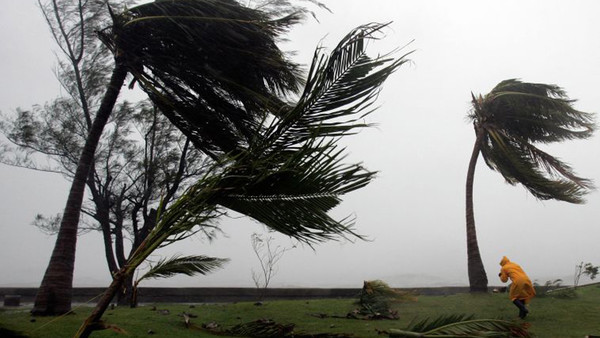
No place to shelter: a hurricane hits Jamaica, which must now abide by the terms of a $2bn bailout from the IMF, World Bank and Inter-American Development Bank
When Hurricane Ivan pummelled Grenada in 2004, fierce gales snapped telephone masts like twigs. With the lines down, it took days before the outside world learnt the scale of destruction the tropical storm had wreaked in the Caribbean state.
In a country of just 100,000 people, 39 died. Aside from the physical scars, Ivan left a lasting, debilitating legacy: huge government debts inflated by the expense of rebuilding battered schools, infrastructure and homes. Despite restructuring those debts in 2005, Grenada was still vulnerable when the financial crisis struck, hurting its vital tourism industry. Finding itself on the ropes again, Grenada last month had to renege on its debts.
Grenada is not alone. Many of the smaller countries in and around the Caribbean basin are economically and financially stricken. International Monetary Fund officials say the region is on a “knife’s edge” as it faces years of painful adjustments. This economic fragility has critical implications for regional security. The Caribbean has become an increasingly violent nexus for trafficking drugs, guns and people – and fears are growing that piracy is returning as a strategic threat.
While the US and Europe have lessened their engagement with the Caribbean, many of its countries have found a new friend willing to offer vital aid and investments: China. Former US President George W. Bush described the Caribbean as America’s “third border” but Beijing is now arguably on the cusp of supplanting Washington as the effective regional power.
As a result, officials inside and outside the region say the Caribbean is entering a crucial period that it will struggle to navigate unscathed. “The Caribbean is at a crossroads,” says Arnold McIntyre, the Grenadan head of the IMF’s regional technical assistance centre. “It faces its most formidable economic challenge since independence.”
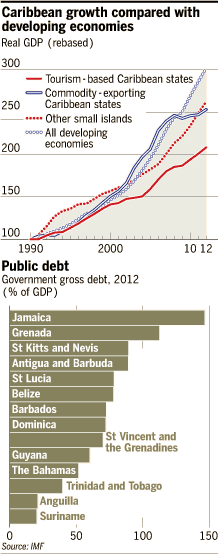
The debt mountain is one of the clearest indications of the Caribbean’s woes. Excluding the larger countries such as Haiti, the Dominican Republic and Cuba – relatively populous nations with very different challenges – the region’s overall government debts amount to more than 70 per cent of gross domestic product, according to the IMF. For small, open economies, that is dangerously high, says Stuart Culverhouse, chief economist at Exotix. Jamaica’s debt was even higher at the end of last year, reaching 143 per cent of GDP. This is forcing the country into a painful fiscal retrenchment as it has to abide by the terms of an IMF bailout.
The strain is already becoming too much for some countries. St Kitts and Nevis, Belize and Jamaica have had to restructure. Sebastian Espinosa of White Oak, a advisory firm helping Grenada with its restructuring, warns that others could follow if growth does not recover soon. Even wealthier states such as the Bahamas are considered vulnerable. “The Caribbean is ground zero for sovereign debt restructurings,” says Carl Ross of Oppenheimer, a US investment bank.
Yet debts are a symptom not a cause of the region’s underlying malaise. Restructurings will offer only a temporary respite. Hurricanes are only partly to blame. Although ferocious storms cause periodic devastation, the fundamental challenges are political and economic. Irresponsible government spending has compounded the problem facing uncompetitive Caribbean states. Simply because of their small size, the economies have to import most of their basic goods and are always vulnerable to any shocks.
Since the independence wave of the 1960s and 1970s, public spending on social programmes, education and jobs has steadily increased. But growth has largely remained sluggish, dependent on niche sectors such as banana and sugar exports to Europe, financial services and tourism.
The result has been decades of stubbornly high budget and trade deficits, financed by borrowing. “We have adopted a tradition in these islands that the government’s role is one of largesse … and patronage,” says Mark Brantley, opposition leader in St Kitts and Nevis. “Governments have continued to borrow and spend with no attention to fiscal sobriety.”
The former European colonies in the Caribbean had enjoyed preferential access to the EU for banana and sugar exports. But after a legal battle dubbed the “banana wars” the World Trade Organisation in 1997 ordered an end to the arrangement, arguing it discriminated against other producers. This was a heavy blow, particularly to big sugar producers such as St Kitts, and banana exporters such as Belize and Dominica. In the latter, banana exports collapsed to just 1.5 per cent of GDP in 2008, from almost a quarter in 1988.
Tourism long proved more buoyant. Increasing numbers of visitors triggered a tentative improvement in government finances around the turn of the millennium. But the financial crisis clobbered tourism revenues and budgets have unravelled again.
George Tsibouris, the IMF’s eastern Caribbean division chief, says the region is now facing yet another “lost decade”. “It will take years of commitment to these goals to bring the ship safely back to shore,” he predicts.
Visitor numbers have started to pick up again, particularly in countries that traditionally attract more US than European visitors, such as Jamaica and the Bahamas. Alan Leibman, chief executive of Kerzner International, which manages the Atlantis hotel in the Bahamas, says that “it has been a challenging few years” but notes that January was the hotel’s best ever month for bookings.
Nonetheless, visitors are spending less money, and countries popular with Europeans, such as Grenada, are facing particularly steep drops in tourism revenue. Tourism is also often a zero-sum game: one country’s gain is often its neighbour’s loss.
Unexpected shocks have hit even the stronger states. In January 2009, CL Financial, an insurance conglomerate based in energy-rich Trinidad and Tobago, unexpectedly imploded. This proved to be the Caribbean’s Lehman Brothers, rattling almost every country in the region. The IMF estimates the cost of the collapse at 3.5 per cent of GDP on average for the Caribbean countries – rising to more than 10 per cent for Trinidad and Tobago. The clean-up continues.
Aid to the region has also shrivelled since the end of the cold war. Multinational organisations such as the IMF, the World Bank and the Inter-American Development Bank are putting their time and money into the region – most recently agreeing a four-year $2bn aid facility for Jamaica. But local officials feel the Caribbean’s traditional friends – the US, the UK and to an extent Europe – have lost interest.
Keith Mitchell, Grenada’s prime minister, says he understands that the US’s budgetary crisis is constraining its aid, but adds “it is somewhat difficult for us not to feel a sense of neglect when we see the US write off large amounts of debts owed by countries that it considers strategically important”.
China, on the other hand, has become increasingly influential in Caribbean capitals. The initial trickle of aid was tied to accepting Beijing’s “One China” policy and breaking off relations with Taiwan. The reward took the form of sparkling new cricket stadiums that were built and paid for by China. But David Jessop, the head of the Caribbean Council, a consultancy and think-tank, argues that Beijing’s policy has recently evolved markedly.
“The past couple of years its money has been redirected from financing small vanity projects to large scale investments and a heavy Chinese presence on the ground,” he says. “It is distinctly different from a few years ago and appears to be more strategic in its intent.”
Caribbean nations are treating China’s advances with a mix of curiosity, apprehension and eagerness. Andrew Holness, the former prime minister of Jamaica and now leader of the opposition, insists that the US is “our longstanding close friend” but says his country “is in a pivotal position regionally to help project China”.
Nevertheless, few expect China to be the Caribbean’s white knight. More effective remedies will have to come from the Caribbean itself.
One of the favoured solutions is to weave the smaller Caribbean countries closer together – economically, financially and politically. This would allow micro-states to rationalise the money they have to spend on the necessities of nationhood such as embassies or coastguard forces. A common market for goods, capital and labour could rear bigger companies.
“It’s hard to see how they can extricate themselves from their problems while insisting on remaining independent sovereign states,” notes Sir Ronald Sanders, a former diplomat for Antigua and Barbuda.
The Caribbean Community, or Caricom, was set up in the 1970s specifically for this purpose, but the Guyana-based body appears to have atrophied. Criticism is rife. “Caricom is a busted flush,” one observer says.
Organisations such as the IMF are supportive of closer co-operation, but some warn of its limits. Some officials have become cynical and doubt Caribbean politicians will truly relinquish any meaningful sovereignty, complaining that they have yet to fathom the depth of their crisis.
“Closer integration is like economic theology in the Caribbean,” says one official. “All the politicians chant about the importance of integration at meetings, but then go back home and say ‘no one is coming to our country to work without a work permit’.”
The Caribbean states do have some advantages, however. They are, for the most part, stable democracies and investments in education have forged a relatively highly skilled workforce. Although the “brain drain” is acute, emigrants’ remittances have become a vital source of foreign currency.
Moreover, many countries can count on plentiful resources. Trinidad and Tobago is a large exporter of liquefied natural gas. Guyana and Jamaica are leading bauxite producers. The Dominican Republic, the region’s biggest economy after Cuba, is growing relatively steadily.
Much can also be done to make the Caribbean more resilient to natural disasters. A disaster insurance facility is promising and the World Bank is advocating investments in buttressing buildings to lessen storm damage. “It’s cheaper to make something more durable and hurricane-proof than rebuilding it after a storm,” says Françoise Clottes, the World Bank’s Caribbean director.
Nonetheless, no one is under any illusion that the years ahead are going to be anything but tough. Debts are too high, the budget deficits too big and economies too weak for countries to be able to avoid deep budget cutbacks. That will prove painful.
“Poverty, insecurity and crime are going to go up,” warns Gerard Johnson, the Inter-American Development Bank’s Caribbean general manager. “This is an existential crisis.”
Petrocaribe: An imperilled lifeline of cheap oil
The death of Venezuela’s president, Hugo Chávez, will be felt keenly across the Caribbean, where there are fears that the socialist leader’s oil-funded largesse may begin to dry up.
Most countries in the region have come to depend on Venezuela’s subsidised oil through the Petrocaribe agreement for the smooth functioning of their economies.
Signatories can buy shipments of Venezuelan oil on extremely generous terms, receiving a lifeline for struggling economies that can ill-afford market rates. Some pay as little as 5 per cent upfront (at the most 50 per cent) and just 1 per cent interest on the rest, which can be paid over periods of up to 25 years.
Although Cuba is the biggest recipient of Venezuela’s aid, receiving around 100,000 barrels per day, worth more than $3bn last year, the smaller Caribbean islands import most if not all of the oil they consume, and are especially vulnerable.
Jamaica has said that if its Petrocaribe agreement were to end, it would need to find another $500m a year to pay for oil imports.
The Dominican Republic is saddled with about $3bn in debt for its 50,000 barrels per day, and is repaying much of its loan in kind. It recently sent Caracas a 10,000-tonne shipment of black beans.
Mr Chávez’s successor, Nicolás Maduro, is expected to safeguard Petrocaribe in the short term. But it will not last for ever. Mr Maduro will sooner or later be faced with some tough decisions as his own country’s economy faces severe challenges, which place the future of the policy at risk. Opposition politicians have called for an end to the discounted oil shipments.
“A lot of the smaller countries depend on the continuation of Chavismo in Venezuela,” says Victor Bulmer-Thomas, a professor at University College London’s Institute of the Americas.
Some countries have begun to take precautions. Offshore exploration has taken off in the past year across the region, with the Bahamas, Jamaica and Barbados all announcing plans to start oil and gas exploration in their territorial waters.
Here is a link to the Fincial Time article.